There was a time when businesses fought hard to rank on Google. You wrote blogs, optimized pages, built links, all to get that one golden click.
But now, things are changing fast.
ChatGPT and other AI tools are becoming the new front doors of the internet. People are no longer clicking links. They’re asking questions and getting full answers right there in the AI window.
This shift is creating a silent threat for businesses: the ChatGPT tax.
What Is the ChatGPT Tax?

Let’s break it down.
Right now, ChatGPT, Gemini, Perplexity, and other AI tools are using your website’s content to answer people’s questions. They crawl your pages, take the best bits, and serve them as answers without needing to send the user to your site.
So even if your content is great, you don’t get the traffic. You don’t get the email signup. You don’t get the sale.
Soon, if you want your brand to be mentioned inside these AI answers, you’ll have to pay for it.
That’s the ChatGPT tax.
It’s not an official name (yet), but the idea is simple:
“If you’re not getting clicks anymore, you’ll need to buy your way into visibility.”
Why ChatGPT or LLM Tax is a Big Deal?
Because AI is eating the top of the funnel.
That’s the part where customers are researching, looking for the best product, comparing options, asking for reviews, guides, and ideas.
This was where SEO and content marketing helped you win. But now, AI handles all that research inside its own answers. Your content still helps, but only in the background.
So unless you’re featured in the final AI answer, you’re invisible.
And the only way to be visible? Sponsored answers. Paid placement. In other words, a new kind of ad budget.
What Will It Look Like?
Think about how Google Ads work today:
- You pay to appear at the top of search results.
- You target keywords.
- You outbid others.
Now imagine that in ChatGPT:
- You pay to be part of the answer.
- You target queries like “best CRM for startups” or “cheapest cloud provider.”
- You outbid other brands trying to be in the same response.
It’s still advertising, just inside a chatbot.

And since users aren’t clicking links anymore, you have no choice. If you don’t pay, you don’t appear.
Who Pays the Price?
Small and mid-size businesses.
Big companies will have the budgets to run these new ad formats. But for everyone else, the cost of staying visible will go up.
Even now, most brands don’t even know how often they show up in ChatGPT answers. There’s no dashboard. No analytics. It’s a black box.
You might already be losing traffic, and not even know it.
What Can Brands Do Today?
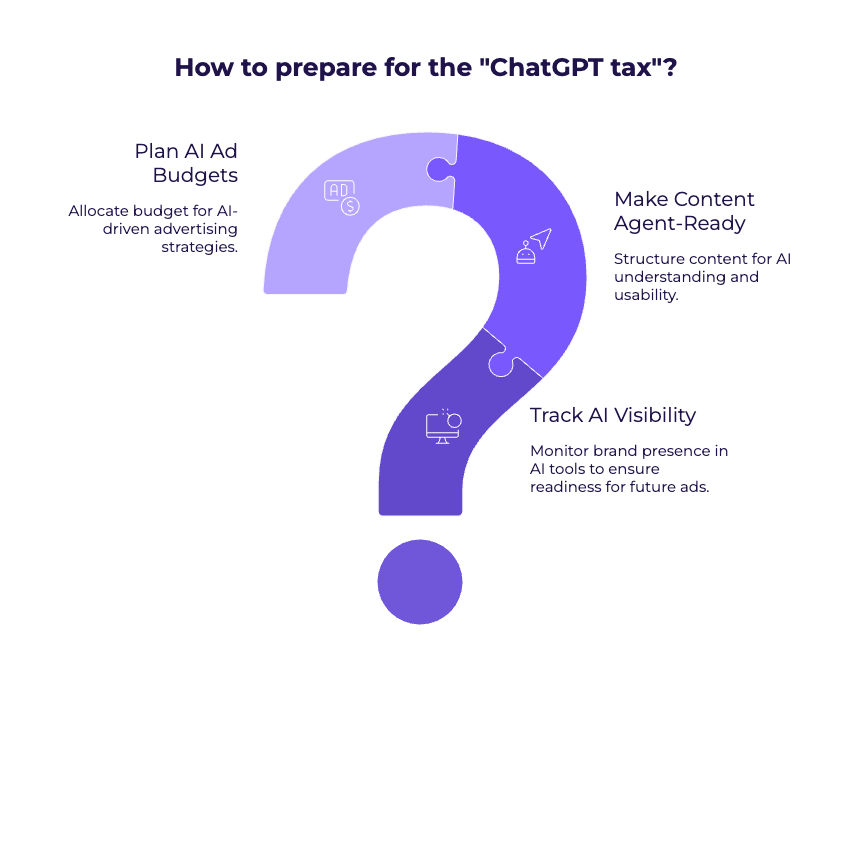
Here are three steps to prepare before the “ChatGPT tax” becomes the norm:

1. Track Your AI Visibility
Use tools that help you monitor how often your brand shows up in ChatGPT, Perplexity, and other AI tools. If you’re not visible now, you won’t be ready for future ads either.
2. Make Your Content Agent-Ready
Just like websites had to become mobile-friendly, they now need to be AI-friendly. This means structuring your content so agents and LLMs can understand and use it.
3. Plan for AI Ad Budgets
Start thinking about what kind of questions you want to show up in — and what kind of budget you’re willing to spend. This is the new SEO + SEM mix.
Final Thoughts
The web is moving from “click to visit” to “ask and get.”
And when users stop clicking, platforms will start charging.
The ChatGPT tax is coming, not as a bill in your inbox, but as a shift in how visibility works. Brands that prepare early will stay ahead. The rest will pay later.